Saturday, 8 June 2013

WebCake Adware Removal Guide

If you’re reading this it is very likely that your computer is infected with WebCake adware which displays extremely obnoxious and intrusive WebCake Ads. Or maybe you want to know what this annoying and potentially dangerous software can do. If so, read on as we take a look at what this adware can do to your computer.

Adware is a program that, normally without your permission or even your knowledge, installs a component onto your computer that sends you targeted adverts. These adverts take the form of pop-up windows and apart from being annoying they can cause you quite a lot of problems too. This particular adware also displays inline ads saying "WebCake Ads" or "Not affiliated with [sitename], WebCake ads" even on the most visited websites like Youtube or Yahoo.


WebCake adware may cause issues with the other programs that you have installed on your PC and they will very likely disrupt your entire operating system, making both your computer’s processor and your internet speeds slow down quite dramatically until you’re tearing your hair out!

Some types of adware will redirect you to websites that you were not looking for. And unfortunately these can often be sites of an illegal or explicit nature, which asides from being embarrassing if you’re in the office, can also lead to misunderstandings within a relationship.

One of the problems with adware is that it hijacks your computer’s system and hides itself so well deep in the darkest recesses of your operating system that it is very tricky to remove for anyone other than a technical whiz kid who knows not only what they’re looking for but where to find it. However even someone that does know their way around a computer may have trouble locating the adware as some varieties stop you from being able to access the areas you need to go to in order to remove it!

So what can WebCake adware do to your computer? There are four things:
  • It will slow down your computer’s processor and internet speed because it adds unwanted websites to your favourites folder and uses up the free memory space you have available
  • It can cause conflicts and can adversely affect other programs you have installed upon your computer
  • It may hijack your home or browser page and redirect you to websites that you aren’t interested in visiting
  • It enables those irritating WebCake pop-up adverts that are not just annoying but can also disrupt your system – as we’ve seen above
Due to the conflicts that may be caused with other programs and the slowing down of your system, WebCake adware also puts your computer’s security at risk as both of these things can make your computer unstable.

Thankfully there are ways to lower your risk of being infected by this adware and there are also ways to find and delete it if you have fallen prey to it. Here’s how to avoid becoming a victim:
  • Don’t download software from unreliable websites or websites that you don’t trust. Pirated software often contains adware and spyware (which can be even more dangerous than adware)
  • If you’re installing something on your computer be careful and decide whether or not it really is necessary. If it’s something you know is reputable and you’ve used before then, OK, but installing something you know nothing about may not be worth the risk
  • Use a pop-up blocker. Some browsers will give you the choice of blocking all pop-ups and will inform you if the site wants you to allow pop-ups. Again, this is up to you to decide whether or not you think the site is trustworthy
  • If you do want to close a pop-up window always click on the red ‘X’ in the corner. Don’t click ‘OK’ or ‘No Thanks’ to close it as you may be inadvertently installing more adware or even spyware on to your PC
  • Always have a well-known anti-malware program installed on your computer and make sure it is kept up to date. This is perhaps the single most important thing you can do as a reputable program will have the ability to stop most spyware and other viruses in their tracks
If you have been unlucky enough to be a victim, unfortunately getting rid of WebCake adware and spyware can be a real pain. If you think you’ve been infected you should close all the web pages that you have open. Next run recommended anti-malware software so it can scan your system and locate and delete any found adware, spyware or other malicious software. After that, restart your computer and run the scan again – some malicious software can be extremely tricky to delete. You may even want to scan your computer again for the third time to be sure.

If you think that you may still be infected and you’re not sure what to do next, please follow the WebCake adware removal guide below. If you have any questions, please leave a comment below. Good luck and be safe online!

Written by Michael Kaur, http://deletemalware.blogspot.com


WebCake removal instructions:

1. First of all, download recommended anti-malware software and run a full system scan. It will detect and remove this infection from your computer. You may then follow the manual removal instructions below to remove the leftover traces of this infection. Hopefully you won't have to do that.


2. Remove WebCake runtime from your computer using the Add/Remove Programs control panel (Windows XP) or Uninstall a program control panel (Windows 7 and Windows 8).

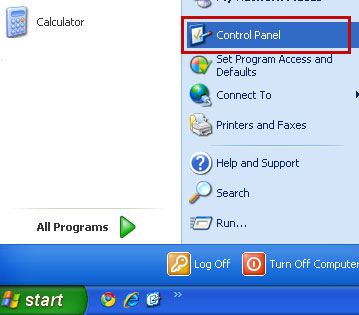
Go to the Start Menu. Select Control Panel → Add/Remove Programs.
If you are using Windows Vista or Windows 7, select Control Panel → Uninstall a Program.


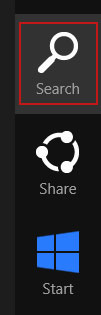
If you are using Windows 8, simply drag your mouse pointer to the right edge of the screen, select Search from the list and search for "control panel".


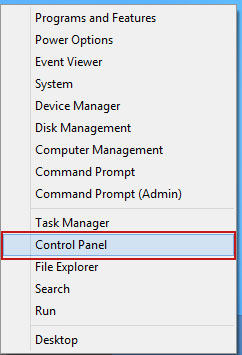
Or you can right-click on a bottom left hot corner (formerly known as the Start button) and select Control panel from there.


3. When the Add/Remove Programs or the Uninstall a Program screen is displayed, scroll through the list of currently installed programs and remove WebCake 3.00.


If you are using Windows Vista, Windows 7 or Windows 8, click Uninstall up near the top of that window. When you're done, please close the Control Panel screen.


Remove WebCake ads from Google Chrome:

1. Click on Chrome menu button. Go to Tools → Extensions.
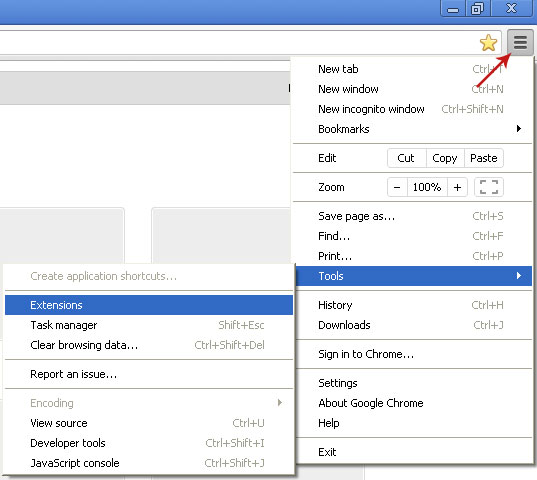


2. Click on the trashcan icon to remove the WebCake extension:


Remove WebCake ads from Mozilla Firefox:

1. Open Mozilla Firefox. Go to Tools → Add-ons.
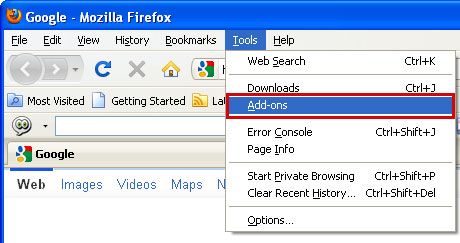


2. Select Extensions. Click Remove button to remove WebCake extension.


Remove WebCake ads from Internet Explorer:

1. Open Internet Explorer. Go to Tools → Manage Add-ons. If you have the latest version, simply click on the Settings button.
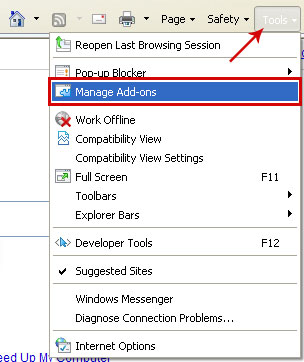


2. Select Toolbars and Extensions. Click Remove/Disable button to remove the WebCake browser add-on.

Friday, 7 June 2013

Remove trustedoffer.com pop-ups and redirection (Uninstall Guide)

So you think you might have had your browser hijacked by trustedoffer.com; what do you do to get rid of it? Browser hijacking, along with spyware, adware, potentially unwanted applications is increasingly becoming more and more of a threat to anyone who browses the internet or installs free programs or software. And let’s face it; that’s most of us! The problem is that a large number of people do not realize if they’ve fallen victim to malware, browser hijacking or any of the other malicious programs or viruses as the programs are secretly installed on your computer. Furthermore some of these people also don’t realize when their system or browser’s settings have been changed, particularly as hijackers and scammers are turning to ever-increasingly sneaky methods to take control of our computers and web browsers.

Recently many PC users have been getting a lot of the following "http://[sitename].trustedoffer.com" when they click on a link or Google search result. A new tab simple pops open from that site whenever they click on a link. What's interesting about these pop-ups though, is that the tab has the name of the site you are on followed by trustedoffer.com. So, for example, if you click on a link on Google, a new tab pops up with the following web address: google.trustedoffer.com.


This is a great example of sneaky web browser hijacking and you should definitely remove malware that causes it. Well unfortunately it’s not as easy as simply uninstalling or deleting software because the majority of the hijacking programs have been designed in such a way that they are difficult not only to remove but also to detect. However in the interests of staying as safe as possible here are some ways to prevent being infected and also how to remove the trustedoffer.com browser hijacker and stop the annoying pop-ups.

First of all, if you are installing a free program always read the disclaimer and don’t just happily click ‘OK’ or ‘Agree’ in the pop up window as there may be some small print telling you that an additional (unwanted) program is being installed. And even more worryingly a lot of these bundled in programs will automatically install spyware or adware.

If you think you can do without any of these programs you should uninstall them as in some cases – but not all – this will also uninstall any of the unwanted associated software that was bundled with it.

Have you spotted a program that you either do not recognize, do not want or no longer use? If so and you are running Microsoft Windows you can try removing it through the ‘Add/Remove Programs’ icon in your computer’s control panel.

Not all tool bars are from unscrupulous third parties; some genuine companies install them too – for example ASK, Google, Yahoo, Windows Live and Alexa. If you don’t want to keep them however, you should also be able to remove them via ‘Add/Remove Programs’.

Unfortunately it’s not always this easy and if the browser hijacker or spyware program you're trying to remove is not playing ball and either cannot be uninstalled or if it reinstalls itself when you reboot your computer you should boot your PC into Safe Mode and uninstall the program again.

As the name infers, some of these unwanted programs have been designed to take control of your browser and change its settings. For example your default home page has been set to a different one or your search engine has changed to one of the hijacker’s choosing.

The next time you open your browser you should find it has re-set itself to your original choice. If your browser does revert back to the unwanted one however it probably means that you have re-visited the website that was responsible for hijacking your browser. If you think you know which website it was make a mental note not to visit again. If you’re not sure or if you want to properly protect yourself, the single best thing you can do is to install anti-malware software on your computer. Now, to remove trustedoffer.com from your computer, please follow the removal guide below. If you have any questions or suggestions, please leave a comment below. Good luck and be safe online!

Written by Michael Kaur, http://deletemalware.blogspot.com


trustedoffer.com removal instructions:

1. First of all, download recommended anti-malware software and run a full system scan. It will detect and remove this infection from your computer. You may then follow the manual removal instructions below to remove the leftover traces of this infection. Hopefully you won't have to do that.


2. Remove trustedoffer.com related prograsm from your computer using the Add/Remove Programs control panel (Windows XP) or Uninstall a program control panel (Windows 7 and Windows 8).

Go to the Start Menu. Select Control Panel → Add/Remove Programs.
If you are using Windows Vista or Windows 7, select Control Panel → Uninstall a Program.


If you are using Windows 8, simply drag your mouse pointer to the right edge of the screen, select Search from the list and search for "control panel".


Or you can right-click on a bottom left hot corner (formerly known as the Start button) and select Control panel from there.


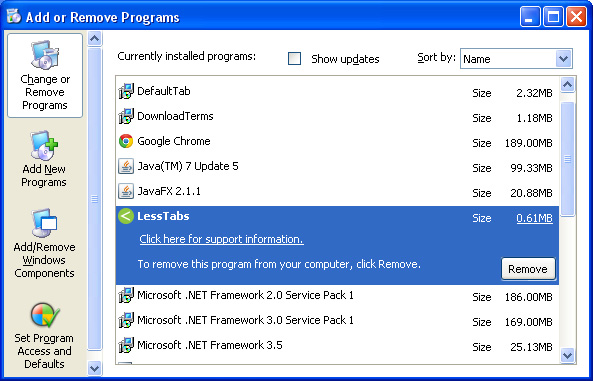
3. When the Add/Remove Programs or the Uninstall a Program screen is displayed, scroll through the list of currently installed programs and remove the following:
  • DefaultTab
  • DownloadTerms
  • LessTabs
  • TidyNetwork.com
  • WebCake
  • and any other recently installed application


Simply select each application and click Remove. If you are using Windows Vista, Windows 7 or Windows 8, click Uninstall up near the top of that window. When you're done, please close the Control Panel screen.


Remove trustedoffer.com pop-ups from Google Chrome:

1. Click on Chrome menu button. Go to Tools → Extensions.


2. Click on the trashcan icon to remove the following extensions:


Remove trustedoffer.com pop-ups from Mozilla Firefox:

1. Open Mozilla Firefox. Go to Tools → Add-ons.


2. Select Extensions. Click Remove button to the following extensions. If you can't find the Remove button, then simply click on the Disable button.


Remove trustedoffer.com pop-ups from Internet Explorer:

1. Open Internet Explorer. Go to Tools → Manage Add-ons. If you have the latest version, simply click on the Settings button.


2. Select Toolbars and Extensions. Click Remove/Disable button to remove the browser add-ons listed above.

Fake Flash Player Update Virus Removal

In this article we’re going to take a look at the fake flash player update virus, understand a little more about what it is, find out how you know if you’ve been infected with it – and more importantly – how to protect yourself from it and remove it if necessary.

If you keep receiving ads for fake Adobe Flash Player upgrades then your computer is infected with adware. You may find that other users say it's a virus and I wouldn't say they are completely wrong even though technically it's adware. Adware is a compound word; the result of joining the words adverts or advertisements and software. The explanation of ‘adware’ is that it is any type of software that, once installed on your computer (often without your permission or even your knowledge) it tracks your internet user habits – i.e. it monitors which sorts of websites you visit on a regular basis – and then it sends you pop-up windows containing advertisements related to the sites and topics you've visited. Or as in this case, it simply displays unwanted Flash Player update warning pop-ups claiming that for instance that 'A Flash Player Update is recommended to view this content' or 'Please install flash player hd to continue'. Scammers have made many different ads but usually the fake update looks similar to the following:


Clearly, this is NOT an actual update. We’ve all seen those annoying pop up 'Please Update Flash Player' – they seemingly appear from nowhere and as far as you know you haven’t clicked on anything agreeing to be targeted in an ad campaign but whilst adware may sound like it is innocent (albeit it rather annoying!) it can actually give you real cause for concern. At its least dangerous adware will gobble up your computer’s operating speeds, slowing down both your PC’s processor and your internet connection. At its worst it may be integrated with spyware.

As the name implies spyware is software which monitors your computer usage but for reasons rather more sinister than adware, which is actually just a form of aggressive online marketing.

So how do you know if your PC has been infected with fake flash player update virus - and possibly spyware? Luckily there are a number of things to look out for which will help you to identify if your computer has it. Here are some of the things to keep a vigilant eye out for:
  • You are receiving pop-up adverts on a regular basis
  • Your computer is noticeably slower than it has previously been
  • Your internet speed is a lot slower (and it’s not the fault of the connection or your internet provider)
  • A search bar or toolbar that you don’t recognise suddenly appears in your internet browser – and even if you’ve uninstalled it, it refuses to go away!
So how do you avoid being inflicted by the scourge that is adware and its annoying and potentially dangerous flash update pop-up adverts? Let’s take a look at some precautions you can take. Most importantly, before you click on something to download it ensure you recognize the name of the publisher and read the small print. If it's not Adobe then don't download and install it. Adware will even often be bundled with innocent downloads but it will also normally be mentioned in the small print, so don’t just click ‘ok’ in every window when installing or downloading something – even if you trust the source. On a similar note, don’t download files from sources you don’t know or trust. And don’t download attachments (whether they’re files, photos, games or e-cards) in emails unless you know the sender. If you do get a pop-up advert, close it by clicking the red ‘X’ in the corner of its window. Even if it says ‘Click OK to Close’ you could be unwittingly inviting spyware to install itself on your PC. Use a firewall to protect your computer, particularly if you use a broadband connection. And last but definitely not least always ensure you have reputable and up to date anti-virus or anti-adware software installed upon your computer.

What if you have been unlucky enough to have been infected by the fake Flash Player update virus? You should run recommended anti-malware software so that it can scan your computer and locate any infected applications. Decent anti-malware software will remove any adware that it finds. You should also uninstall applications that you've recently installed since there's a great chance that the fake pop ups came from them or third party web browser plugins. Do watch out though as some adware programs are notoriously difficult to remove so it might take more than one attempt and if they’re still refusing to get lost, you would be advised to follow the fake Flash Player update virus removal guide below. If you have any questions or suggestions, please leave a comment below. Good luck and be safe online!

Written by Michael Kaur, http://deletemalware.blogspot.com


Fake Flash Player update virus removal instructions:

1. First of all, download recommended anti-malware software and run a full system scan. It will detect and remove this infection from your computer. You may then follow the manual removal instructions below to remove the leftover traces of this infection. Hopefully you won't have to do that.


2. Remove fake Flash Player update adware from your computer using the Add/Remove Programs control panel (Windows XP) or Uninstall a program control panel (Windows 7 and Windows 8).

Go to the Start Menu. Select Control Panel → Add/Remove Programs.
If you are using Windows Vista or Windows 7, select Control Panel → Uninstall a Program.


If you are using Windows 8, simply drag your mouse pointer to the right edge of the screen, select Search from the list and search for "control panel".


Or you can right-click on a bottom left hot corner (formerly known as the Start button) and select Control panel from there.


3. When the Add/Remove Programs or the Uninstall a Program screen is displayed, scroll through the list of currently installed programs and remove the following:
  • DefaultTab
  • DownloadTerms
  • LessTabs
  • TidyNetwork.com
  • WebCake
  • and any other recently installed application


Simply select each application and click Remove. If you are using Windows Vista, Windows 7 or Windows 8, click Uninstall up near the top of that window. When you're done, please close the Control Panel screen.


Remove fake Flash Player update pop ups from Google Chrome:

1. Click on Chrome menu button. Go to Tools → Extensions.


2. Click on the trashcan icon to remove the following extensions:


Remove fake Flash Player update pop ups from Mozilla Firefox:

1. Open Mozilla Firefox. Go to Tools → Add-ons.


2. Select Extensions. Click Remove button to the following extensions. If you can't find the Remove button, then simply click on the Disable button.


Remove fake Flash Player update pop ups from Internet Explorer:

1. Open Internet Explorer. Go to Tools → Manage Add-ons. If you have the latest version, simply click on the Settings button.


2. Select Toolbars and Extensions. Click Remove/Disable button to remove the browser add-ons listed above.

Sunday, 2 June 2013

V9 Portal Site Removal Guide

Browser hijacking is both an annoying and a dangerous problem that can plague internet users. If your home page has been hijacked by V9 Portal Site, it’s fair to say that your computer is infected. To remove it from Chrome, Firefox and Internet Explorer, please follow the removal guide below.

What is browser hijacking and what happens to your computer if you’ve been attacked? Browser hijacking actually encompasses a number of different malicious software programs (known as malware for short) but it is generally agreed that browser hijacking software is an external code that changes your web browser settings without your knowledge or, as far as you were aware, your permission.


You log onto your computer, open the internet and the first thing you see is your home page - your PC’s standard page, a search engine or your favourite news channel. When you search or browse for something online you use a search engine – usually Google, Yahoo or Bing. Furthermore if you visit a website that’s broken or has been removed you will see an error page. When V9 hijacks your web browser you won't see your usual start page. You will see http://en.v9.com instead. Besides, this browser hijacker has different landing pages:
  • V9 Tapak Portal for Frensh and German users
  • Portale V9 - Pagina Iniziale for Italian users
  • Portal de Internet V9 - Mi Pagina Inicial for Spanish users
What browser hijacking means is that the person responsible for it will decide how your home page should look and how your browser works and is configured. Let's say you want to search directly from the omnibox or the address bar, you will be redirected to search.v9.com instead of Google or any other search engine of your choice. Not only it's very annoying but also rather unethical practice. However, I wouldn't blame only those who created the so-called V9 virus. Since this browser hijacker comes bundled with other software most of the time, there's a good chance you haven't read the end user license agreement and agreed to install 'extras' which are very often toolbars or browser hijackers. So, next time be more careful, even when download and installing software from reputable websites.


Why would someone want to hijacker your web browser? Firstly they may want to direct you to a website of their choosing – either to generate traffic or revenue. Secondly – and more worryingly they may install spyware on your PC. Spyware, as the name suggests, spies upon your internet activity. It monitors which websites you visit and other browsing habits. At best this is so the programmers can tailor their adverts to you hence increasing the chances of you clicking and/or purchasing.

So how do you stop yourself becoming a victim of hijacking? Unfortunately nothing can guarantee that but there are precautions you can take: most importantly make sure you have reputable antivirus software installed on your computer, secondly never click on links in spam emails and third always check the ‘small print’ when you’re downloading software or information from the internet and make sure you uncheck any boxes that casually mention that ‘this software also comes with a tool bar’ or other ‘extra (unwanted!) bonus’. To remove V9 Portal Site from your computer, please follow the removal guide below. If you have any questions, please leave a comment below. Good luck and be safe online!

Written by Michael Kaur, http://deletemalware.blogspot.com


V9 Portal Site removal instructions:

1. First of all, download recommended anti-malware software and run a full system scan. It will detect and remove this infection from your computer. You may then follow the manual removal instructions below to remove the leftover traces of this browser hijacker. Hopefully you won't have to do that.


2. Uninstall V9 Portal Site and related programs from your computer using the Add/Remove Programs control panel (Windows XP) or Uninstall a program control panel (Windows 7 and Windows 8).

Go to the Start Menu. Select Control Panel → Add/Remove Programs.
If you are using Windows Vista or Windows 7, select Control Panel → Uninstall a Program.


If you are using Windows 8, simply drag your mouse pointer to the right edge of the screen, select Search from the list and search for "control panel".


Or you can right-click on a bottom left hot corner (formerly known as the Start button) and select Control panel from there.


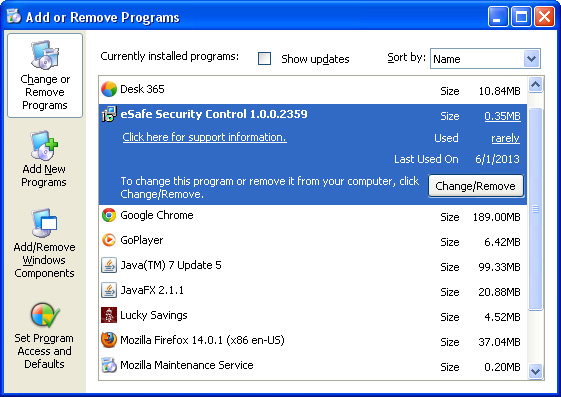
3. When the Add/Remove Programs or the Uninstall a Program screen is displayed, scroll through the list of currently installed programs and remove eSave Security Control, Desk 365, BrowserProtect and any other recently installed application. It is rarely listed as V9. So, either look for applications mentioned here or try to remember what software you installed recently.


Simply select the application and click Remove. If you are using Windows Vista, Windows 7 or Windows 8, click Uninstall up near the top of that window. When you're done, please close the Control Panel screen.


Remove V9 Portal Site from Google Chrome:

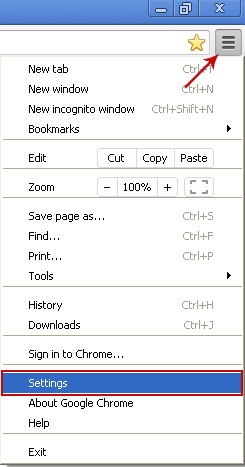
1. Click on Customize and control Google Chrome icon. Select Settings.


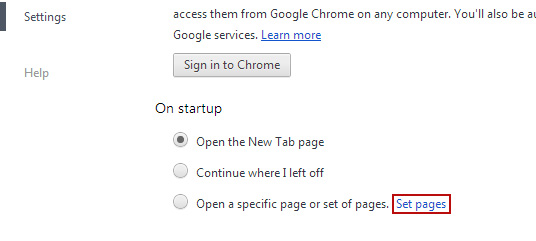
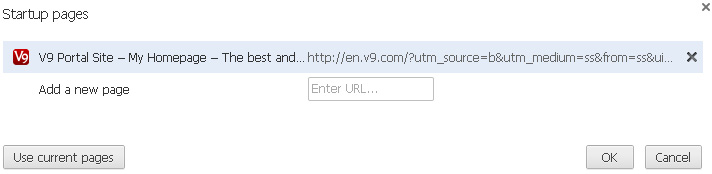
2. Click Set pages under the On startup.


Remove V9 Portal Site by clicking the "X" mark as shown in the image below.


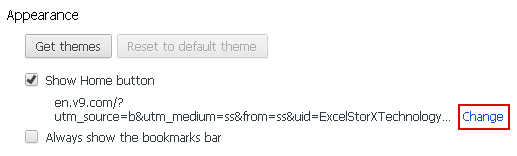
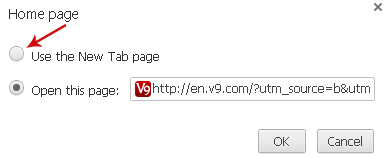
3. Click Show Home button under Appearance. Then click Change.


Select Use the New Tab page and click OK to save changes.


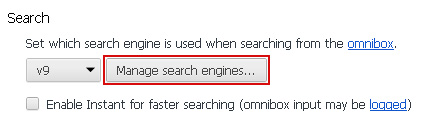
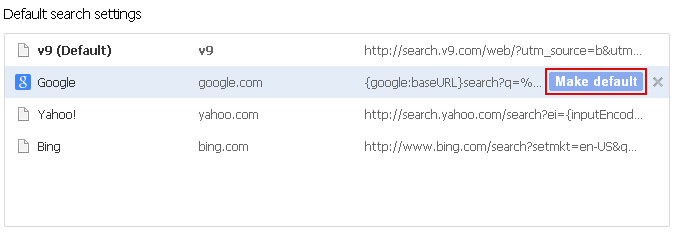
4. Click Manager search engines button under Search.


Select Google or any other search engine you like from the list and make it your default search engine provider.


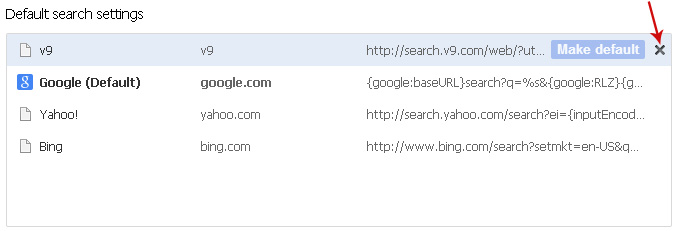
Select V9 from the list and remove it by clicking the "X" mark as shown in the image below.


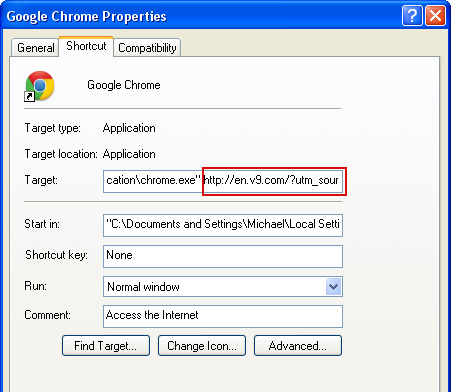
5. Right-click the Google Chrome shortcut you are using to open your web browser and select Properties.

6. Select Shortcut tab and remove "http://en.v9.com...." from the Target field and click OK to save changes. Basically, there should be only the path to Chrome executable file. Nothing more.


Remove V9 Portal Site from Mozilla Firefox:

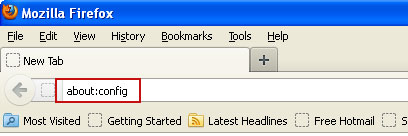
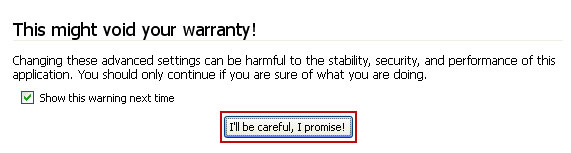
1. Open Firefox. In the URL address bar, type about:config and hit Enter.


Click I'll be careful, I promise! to continue.


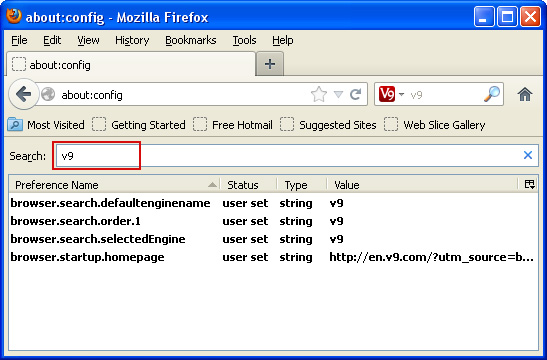
In the search filter at the top, type: v9


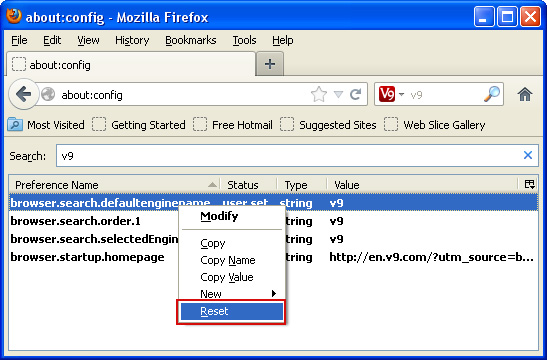
Now, you should see all the preferences that were changed by V9 Portal Site. Right-click on the preference and select Reset to restore default value. Reset all found preferences!


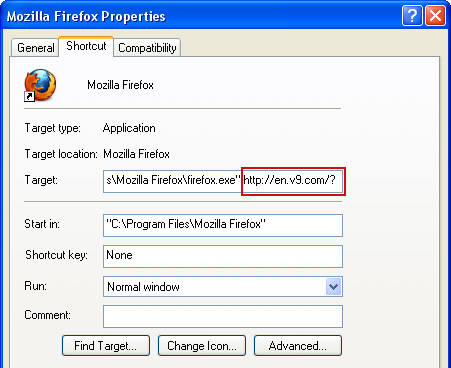
2. Right-click the Mozilla Firefox shortcut you are using to open your web browser and select Properties.

3. Select Shortcut tab and remove "http://en.v9.com...." from the Target field and click OK to save changes. Basically, there should be only the path to Firefox executable file.


Remove V9 Portal Site in Internet Explorer:

1. Open Internet Explorer. Go to Tools → Manage Add-ons.


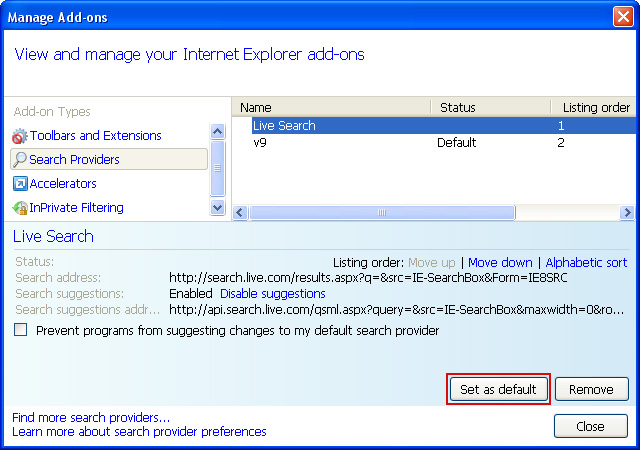
2. Select Search Providers. First of all, choose Live Search search engine and make it your default web search provider (Set as default).


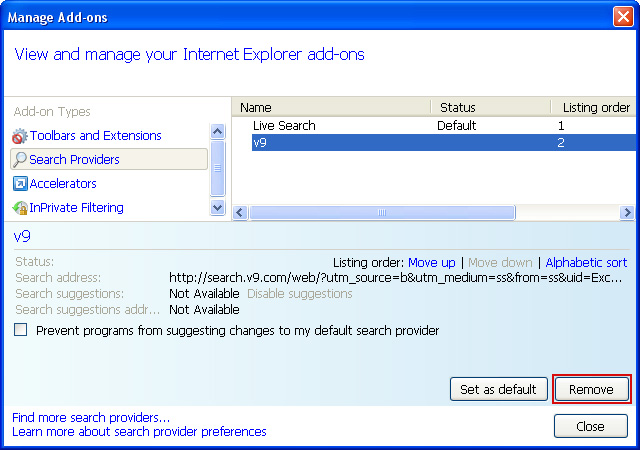
3. Select V9 and click Remove to remove it. Close the window.


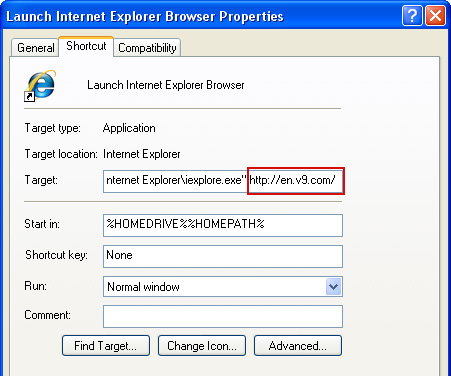
4. Right-click the Internet Explorer shortcut you are using to open your web browser and select Properties.

5. Select Shortcut tab and remove "http://en.v9.com...." from the Target field and click OK to save changes. Basically, there should be only the path to Internet Explorer executable file.


6. Finally, go to Tools → Internet Options and restore your home page to default. That's it!